
ACR Staff
Our fine staff of contributors at Animation Career Review includes:
Shawn Harrell
Deanna Thompson
Jen Lampton
Brad Prescott, Founder
Our fine staff of contributors at Animation Career Review includes:
Shawn Harrell
Deanna Thompson
Jen Lampton
Brad Prescott, Founder
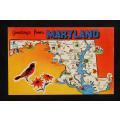
Ok, so Maryland is definitely one of the smallest states by land size, but packed within its borders are nearly 6 million residents, making it the sixth highest density state in the U.S. and the 19th largest by population. While Maryland is also made up of 157 municipalities and 10 cities with populations of more than 25,000, everything that happens in the world of art and design usually happens in Baltimore—the state’s largest city.
Home to nearly 623,000 residents, Baltimore is home to the renowned Baltimore Museum of Art (BMA), The Walters Art Museum, and The American Visionary Art Museum. The city is also home to hundreds of art galleries, design studios, performance venues, and art centers. Just a few include the Patricia & Arthur Modell Performing Arts Center at the Lyric, Center Stage, Baltimore Contemporary Art, and Julio Fine Arts Gallery at Loyola University Maryland.
Scope of Program: Created by professionals from the cinema, animation, visual effects and video game fields, ARTFX is well renowned private, higher education school for digital arts and video game training in Europe. The diversity and singularity of the teaching proposed at ARTFX combines knowledge of traditional arts and advanced training in the latest digital art techniques.

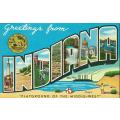
Yes, Indiana has a lot to offer aspiring artists of all kinds. For starters, Indiana is home to 109 Title IV degree-granting colleges and universities, and most are very affordable. Some of the state’s best schools include the University of Notre Dame, Purdue University-West Lafayette, Indiana University-Bloomington, and Ball State University. Next, many of these schools offer a variety of innovative programs for aspiring animators. For example, Indiana University offers a BA in New Media, Art, & Technology with a Creative Digital Development Concentration (video, animation, and/or mobile application development), and Ball State University offers a BFA with an Emphasis in Animation and an MFA in Animation.
With close to 300,000 salaried professionals working in Arts, Design, Entertainment, Sports, and Media (ADESM) occupations, California has the highest population of artists in the U.S. and the number is growing. Just a few years ago, the state was home to just over 280,000 ADESM workers. While the population may have changed over the past few years, the top industries for these professionals have remained the same. The motion picture and video industries, radio and television broadcasting, publishing, and advertising are just a few. Fortunately, the State of California houses thousands of employers in these fields. Just a few DreamWorks Animation, Sony Pictures Animation, Walt Disney Feature Animation, Saatchi & Saatchi, J. Walter Thompson, Foote, Cone & Belding (FCB), SAGE Publications, Alfred Publishing, WB Studio and CBS Studio Center.

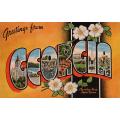
By July 1, 2014, Georgia’s population growth had surpassed 10 million for the first time. It is one of the fastest growing states, and it is home to one of the nation’s fastest growing cities—Atlanta. Forbes lists Atlanta as the 12th fastest growing city in the U.S., and CNN Money ranks the city 10th in ‘Cities People are Moving to’. Although not as large or fast-growing as Atlanta, The Peach State is also home to one of the most charming cities in the U.S.—Savannah. The city of less than 150,000 is home to historic architecture, the prestigious Savannah College of Art and Design (SCAD), Telfair Museums, and more.
Animators create animation and visual effects for films, video games, television, mobile devices, and other forms of media using illustrations and software programs. Adobe After Effects, Adobe Premiere, Autodesk3ds Max, and Autodesk Maya are just a few leading software programs for animators. Animators also create graphics and develop storyboards, drawings and illustrations. They create, plan, and script animated narrative sequences, and assist with background design and production coordination.
The Bureau of Labor Statistics (BLS) combines multimedia artists and animators into one career group. According to the Bureau, “multimedia artists and animators often work in a specific medium. Some focus on creating animated movies or video games. Others create visual effects for movies and television shows. Creating computer-generated images (CGI) may include taking images of an actor’s movements, which are then animated into three-dimensional characters. Other animators design scenery or backgrounds for locations.”
According to the BLS, animators and multimedia artists work in the following industries:
The BLS also mentions that 57 percent of animators were self-employed in 2012. This is the most current figure for self-employed animators. These professionals, not just the self-employed, often work from home. Others work onsite at film, animation or video game production studios, cartoon networks, advertising agencies, web design and graphic design firms, mobile technology companies, and more.

Graphic designers design or create graphics to meet specific needs such as packaging, logos, displays, websites, publications, and more. Some graphic designers even design the overall look for film and television credits. They work with sound, colors, artwork, photography, software, and even animation to produce whatever the project entails.

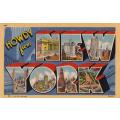
New York is home to the nation’s second largest population of professionals working in Arts, Design, Entertainment, Sports and Media (ADESM) occupations as categorized by the Bureau of Labor Statistics. California is home to the largest group. While many New York artists still work with paint, plaster, and fibers, many artists today rely heavily on computers and software to create art. Digital artists belong to this group and their technical skills and creativity are in high demand at ad agencies, media firms, animation studios, game design firms, web design companies, and more.
California is home to so many graphic design schools you’ll lose count. Many of these schools are part of a larger college or university, while others are part of an art and design school or specialty college. According to the Institute of Education Sciences (IES) National Center for Education Statistics, California is home to 454 Title IV degree-granting institutions.

California is home to 454 Title IV degree-granting institutions. These schools are eligible for Title IV federal financial-aid programs, which makes them more accessible to students with financial need. To earn Title IV status, these schools have obtained accreditation recognized by the U.S. Department of Education, they have been in business for at least two years, they have signed a participation agreement with the Department, and they grant an associate's degree or higher. Title IV schools must also offer a program of at least 300 clock hours in length.